Crispy-Skin Lemon Herb Salmon with Roasted Asparagus and Warm White Bean Salad
How do you cook lemon herb salmon so the skin stays crisp? A 40-minute Mediterranean dinner, 535 cal
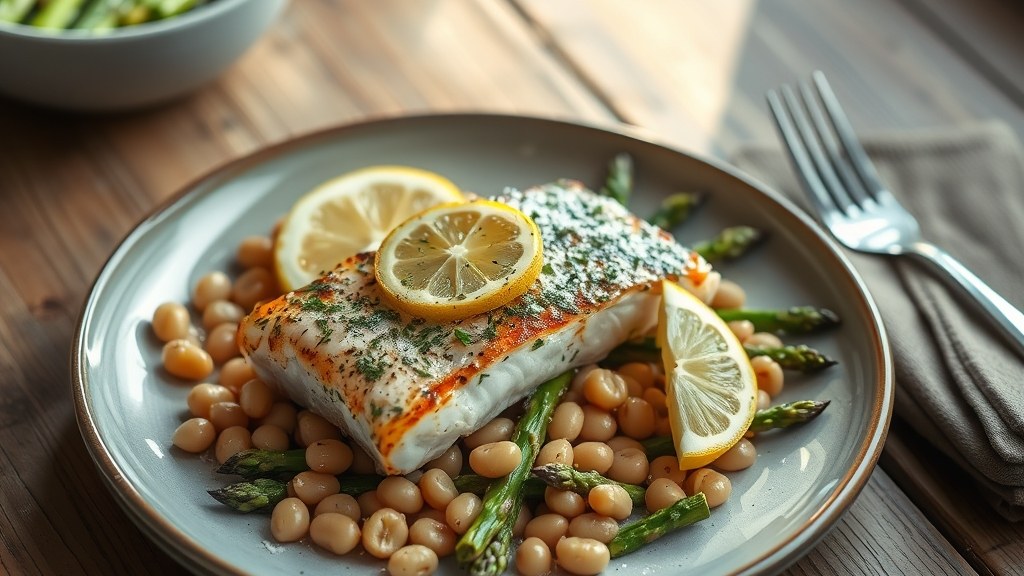
Cold salmon hits a screaming-hot pan; the skin crackles, lemon zest blooms in the oil, and 40 minutes later dinner is on the table.
Ingredients
Serves 4
- 4 skin-on salmon fillets (140 g / 5 oz each), pin-boned
- 600 g (1.3 lb) thick asparagus spears
- 2 x 400 g cans cannellini beans, drained and rinsed (about 400 g drained)
- 2 tbsp extra-virgin olive oil, divided
- 1 large lemon — zest and about 3 tbsp juice
- 3 garlic cloves — 2 sliced, 1 grated
- 1 tbsp Dijon mustard
- 1 tbsp capers, rinsed
- 2 tbsp chopped fresh dill
- 2 tbsp chopped flat-leaf parsley
- 1 tsp dried oregano
- 1/2 tsp red pepper flakes
- 1 tsp fine sea salt, plus more for the beans
- 1/2 tsp freshly ground black pepper
Method
-
Dry-brine the salmon first. Pat each fillet bone-dry with paper towel, lay skin-side up on a plate, and sprinkle 3/4 tsp of the salt evenly over flesh and skin. Leave at room temperature for 15 minutes. Beads of moisture will rise to the surface — blot them off again right before cooking. Removing that surface water is the single thing that decides whether the skin shatters or steams.
-
Heat the oven to 220°C (425°F) with a rack in the upper third. Snap the woody ends off the asparagus — they break at their natural point, so bend each spear and let it tell you where to stop. Pile them on a large rimmed baking sheet, drizzle with 1 tbsp of the olive oil, add a pinch of salt and a few grinds of pepper, and roll them with your hands until every spear is glossy.
-
Spread the asparagus in a single layer with space between the spears. Crowding traps steam and gives you limp stalks. Roast for 10–12 minutes, until the tips are darkened and frizzled and the spears bend under their own weight but still bite back. You will hear them hissing when you open the door. Pull the tray out and leave it on the stovetop.
-
While the asparagus roasts, set a 30 cm (12 in) stainless-steel or cast-iron skillet over medium-high heat for a full 2 minutes. Test with a drop of water: it should evaporate on contact with a sizzle. Add 1 tsp of the olive oil and swirl it across the base.
-
Lay the fillets in the pan skin-side down, working away from you, and press each one flat with a spatula for 20 seconds so the skin makes full contact. Then leave them completely alone for 5–6 minutes. Watch the side of the fillet: the flesh turns opaque from the bottom upward, and the skin releases on its own when it is crisp. If it sticks, it is not ready — give it another 30 seconds.
-
Lower the heat to medium and flip the fillets. Add the sliced garlic, the lemon zest, the oregano and half the dill to the pan. Tilt the skillet and spoon the hot, herb-scented oil over the flesh for 60–90 seconds. The salmon is done at 63°C (145°F) at the thickest point — barely opaque at the centre, still glossy, and it will flake with a gentle push. Move the fillets to a warm plate skin-side up so the crust stays crisp.
-
Wipe the skillet if the garlic caught, then return it to medium heat with the remaining 1 tbsp olive oil, the grated garlic and the red pepper flakes. Stir for 30 seconds — fragrant, not browned. Add the beans, the lemon juice, the Dijon, the capers and 2 tbsp water. Simmer for 2–3 minutes, stirring, until the beans are hot through and the liquid has thickened enough to coat them. Off the heat, fold in the parsley and the remaining dill, then taste and add salt.
-
Spoon the warm beans onto four plates, lay the asparagus alongside, and set a salmon fillet on top of each. Pour any juices from the salmon plate over the beans and serve immediately, while the skin is still audible under the fork.
Nutrition (per serving)
| Calories | 535 kcal |
|---|---|
| Protein | 42 g |
| Carbohydrates | 34 g |
| Fat | 26 g |
| Fiber | 10 g |
More Mediterranean Recipes
-
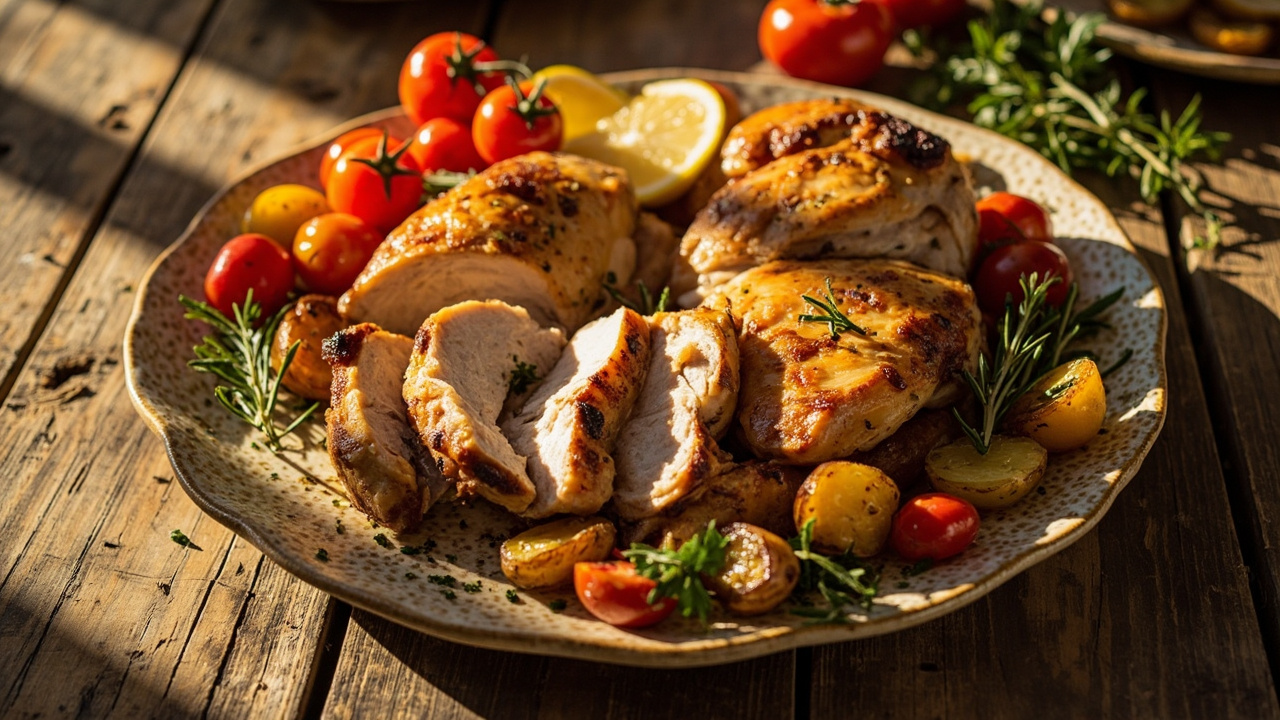
Lemon Herb Roasted Chicken Breast
Mediterranean-style roasted chicken with cherry tomatoes and baby potatoes.
450 kcal 35g protein 40 min -
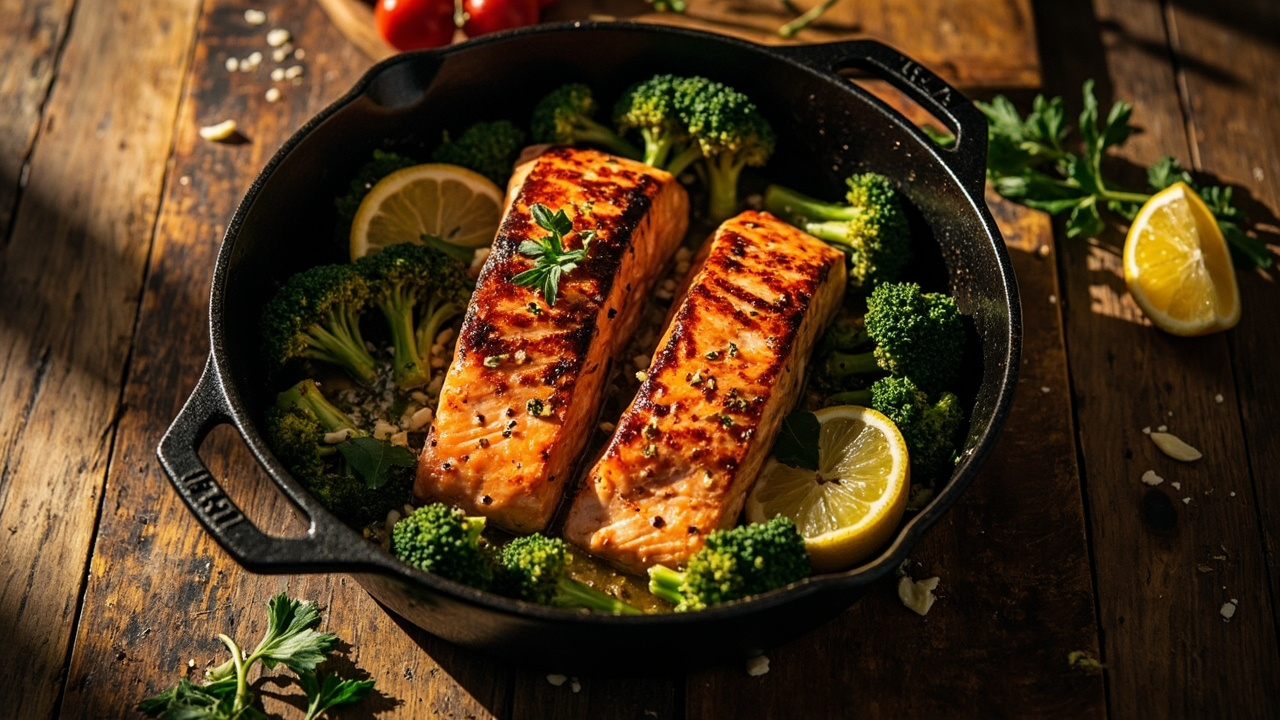
One-Skillet Salmon with Garlicky Broccoli
Pan-seared salmon fillets with broccoli, garlic, and lemon in one skillet.
380 kcal 36g protein 20 min -
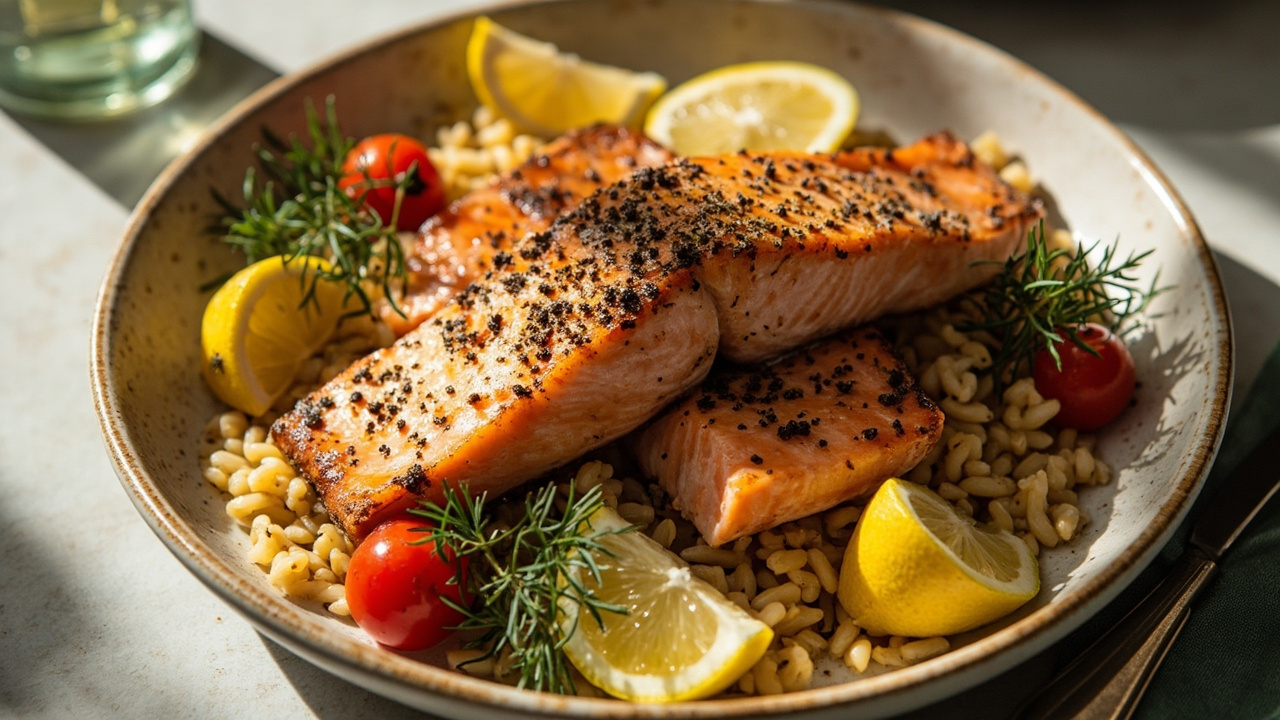
Lemon-Herb Baked Salmon Over Orzo
Bright Mediterranean flavors meet weeknight simplicity
485 kcal 38g protein 42 min -
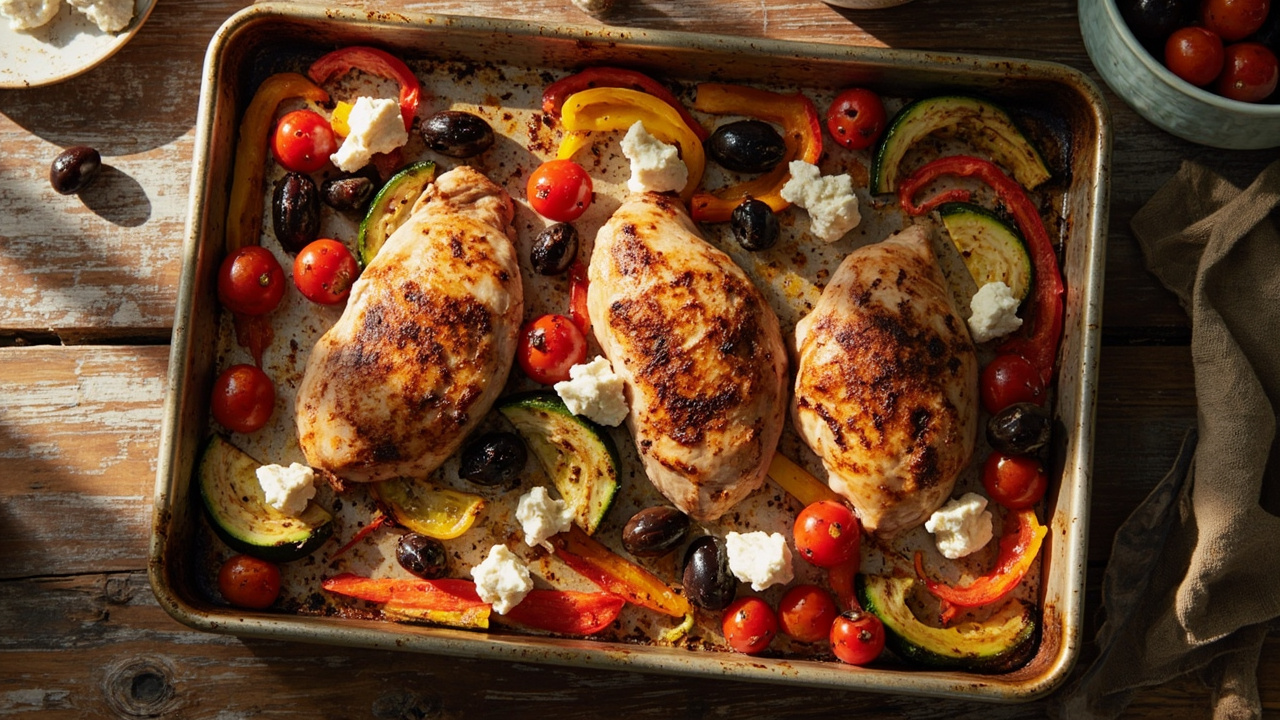
Mediterranean Chicken Tray Bake with Feta and Summer Vegetables
A colorful tray bake with tender chicken, zucchini, tomatoes, and briny olives under a blanket of melted feta
445 kcal 42g protein 50 min -
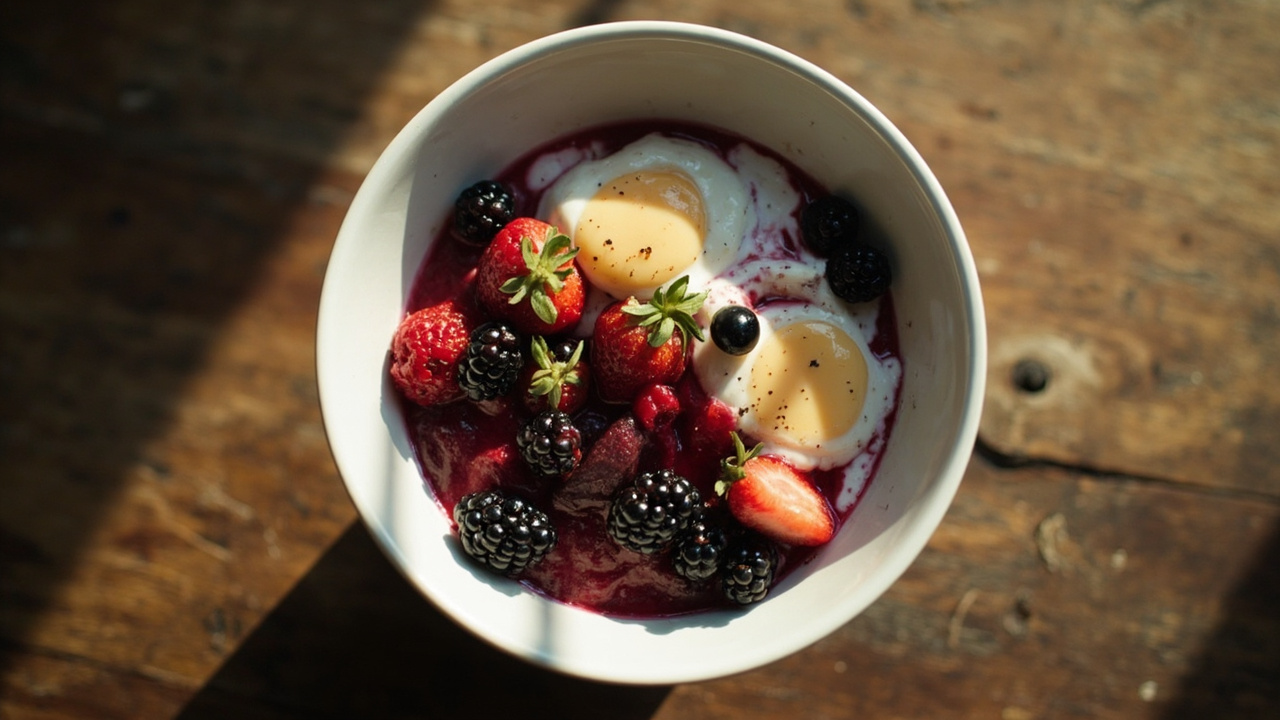
Mediterranean Berry Protein Bowl with Honey-Toasted Granola
High-protein Greek yogurt breakfast bowl with fresh berries, crunchy granola, and chia seeds.
412 kcal 22g protein 30 min -
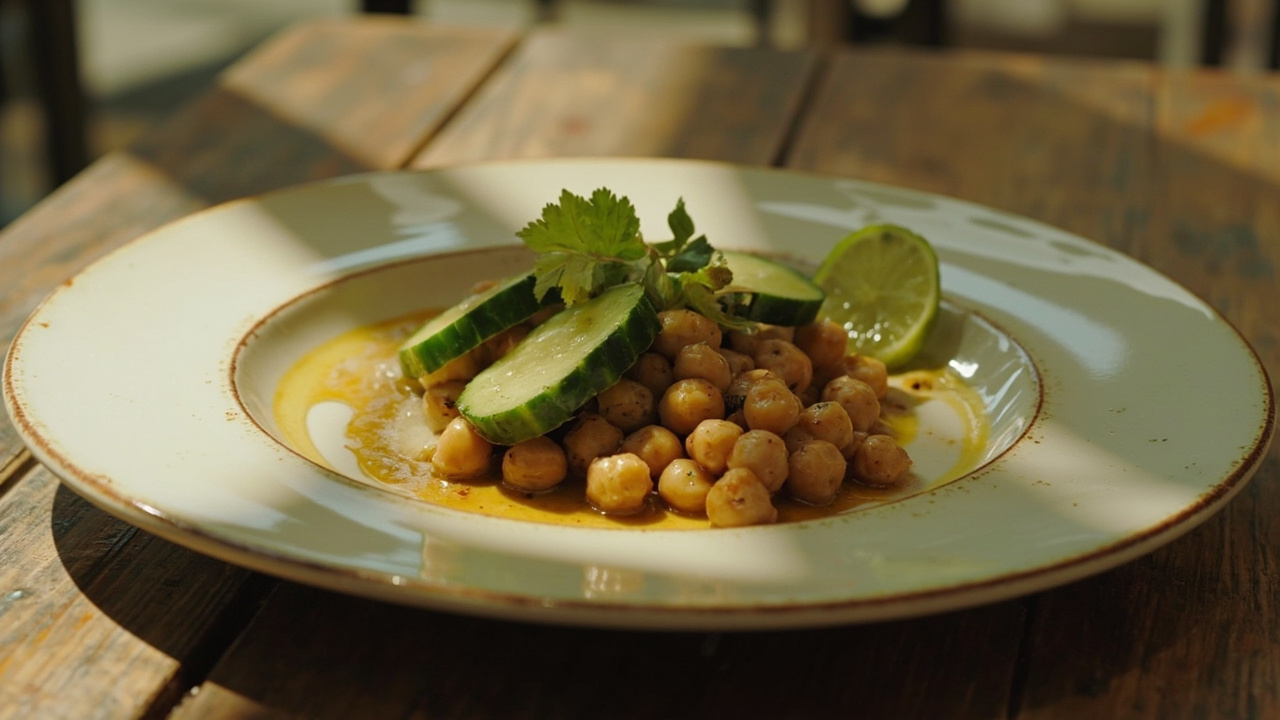
Mediterranean Chickpea and Cucumber Salad with Lemon-Tahini Dressing
Protein-rich Mediterranean chickpea salad with cucumber and creamy lemon-tahini dressing
425 kcal 16g protein 20 min